
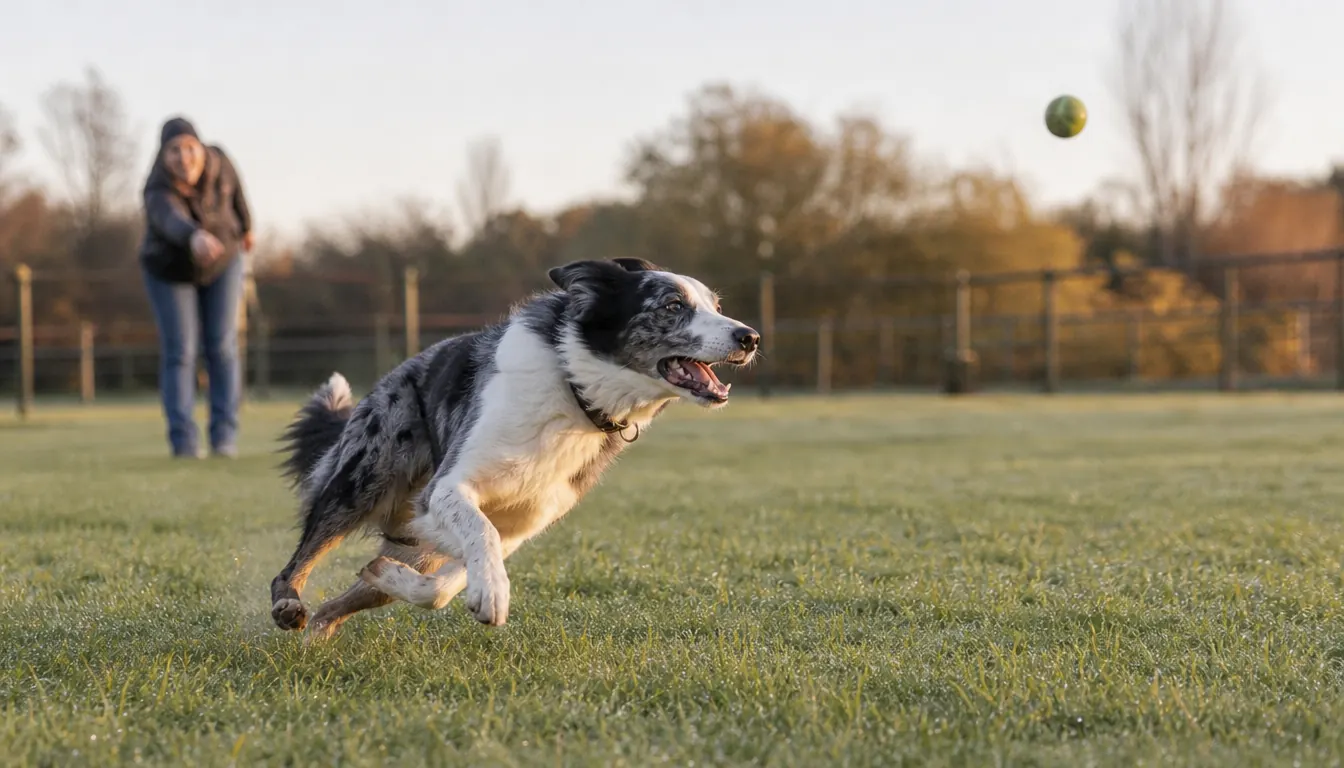
Four years ago a friend at the park handed me her Chuckit! Classic launcher, mostly because she was tired of watching me windmill my arm for an hour every morning. I threw one ball with it, watched it clear the middle of the field without any real effort, and ordered my own that afternoon. It has lived in the back of my Subaru Forester ever since, next to a small collection of slobbery tennis balls, and it comes out most weekday mornings around 7:30.
Here is what four years and a few hundred park visits will teach you about a piece of molded plastic. The launcher does one thing. It does that thing well. And the part that wears out first is almost never the part you would guess. My dog is Maisie, a 6-year-old Australian Shepherd mix at about 48 pounds, and she needs a real run every day or she finds work to do in my living room. Fetch is how we get there, and the Chuckit! Classic is how we do the fetching.
The Quick Verdict
Four years, one launcher, and my right shoulder finally stopped aching on the drive home. If mine cracked tomorrow I would order another before I got out of the parking lot. The ball is the weak point, not the arm.
Amazon Check Today's Price →My shoulder quit complaining about a year after I quit throwing by hand
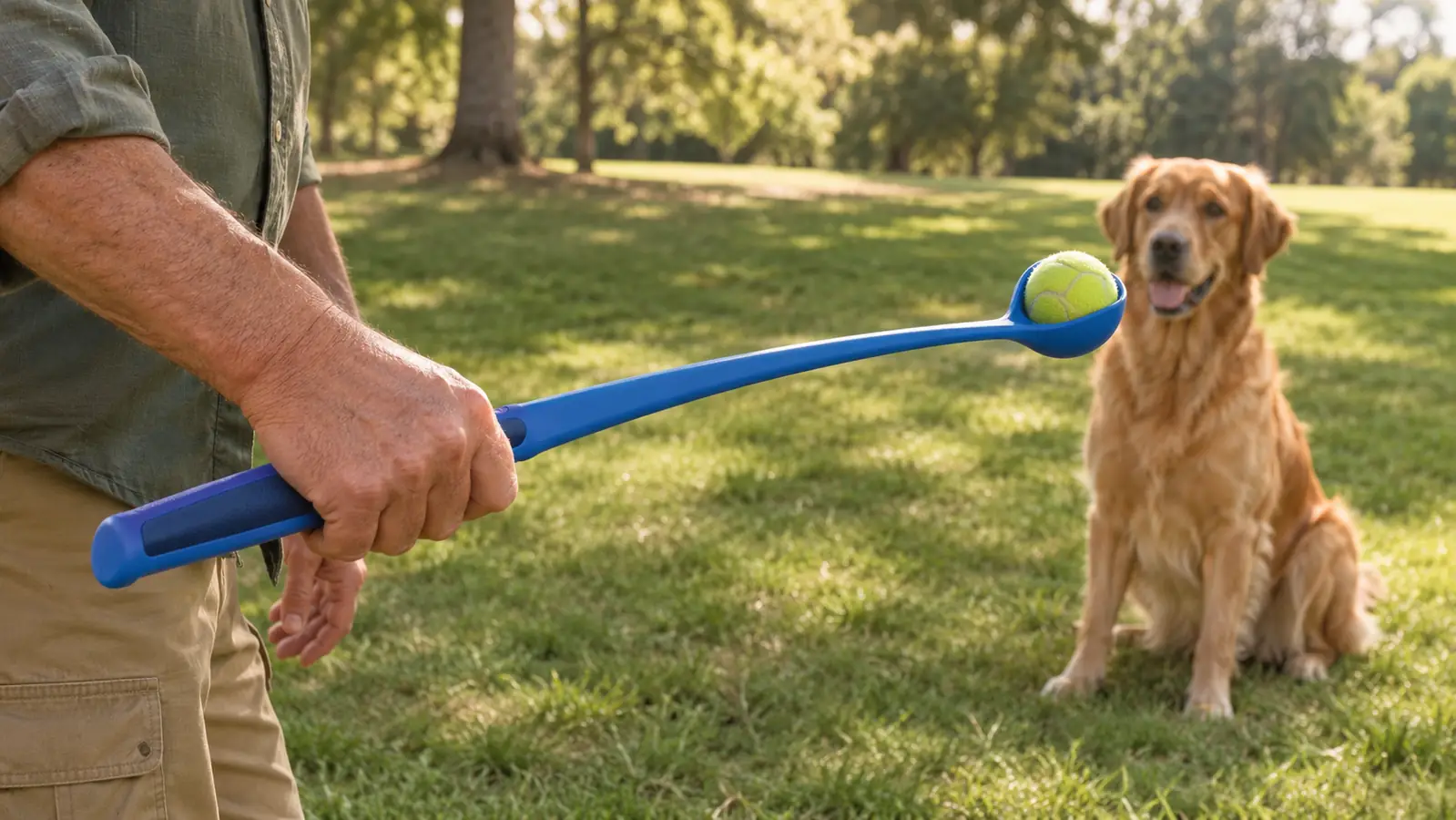
The 26-inch Chuckit! Classic turns a tired arm into a decent outfielder. Lightweight, waterproof, and built for dogs in the 20 to 60 pound range, which covers Maisie and most of the regulars at our gate.
Amazon Check Today's Price on Amazon →How I've Used It
The routine is boring, which is the point. I park the Forester, clip the hands-free leash on Maisie for the walk from the lot to the gate, and let her in. Then the launcher comes out of the car and we go for about an hour. I throw. She runs. I throw again. Somewhere in the middle she takes a long drink from the water bottle I fill at the kitchen sink every morning, and then we start over. Nobody at that park is impressed by anything, and that includes me.
Four years of that adds up to a lot of throws. I have used this launcher in July heat, in a cold drizzle in March, and on one memorable morning after an ice storm when the field was closer to a skating rink than a park. It has been dropped, stepped on, left in a hot car for a week, and chewed on once by somebody else's dog who has no manners. It still throws straight.
Two things surprised me. The first is that my throws got more accurate, not just longer, because the launcher gives you the same motion every single time. The second is that Maisie gets tired in about 40 minutes now instead of the hour and a half it used to take when I was throwing short. A tired Australian Shepherd mix is a well-behaved Australian Shepherd mix, and that is worth more to me than a longer throw.
One more note on routine. The launcher lives in the car, not the hall closet, and that is deliberate. The morning I forget to move it from the kitchen counter to the back seat is the morning I end up throwing by hand and come home with a sore shoulder. Gear that lives where you use it gets used. Gear that lives three rooms away gets forgotten.
What 26 Inches Does to a Tired Arm
The 26-inch length is the whole trick, and it is not complicated. My arm is 63 years old and has spent most of those years pushing paper in a school office, not throwing baseballs. When I throw by hand, the ball goes maybe 40 feet before it nose-dives into the grass. With the launcher, the same swing sends it most of the way across the field, and I am not working harder to do it.
That matters more than it sounds like it would. The park we use is a decent size, so a short throw means Maisie spends half her energy trotting back to me instead of running. With real distance she gets a full sprint out of every throw. Four or five of those and she is panting. Ten and she is finished. The launcher turned an hour of fetch into 40 minutes of actual exercise, which on a wet Tuesday morning is a gift.
It is also genuinely light. I have carried it on neighborhood walks when I did not feel like driving over to the park, and it does not drag at my hand the way a heavier thrower would. Most days it just rides in the back of the car with the balls, which is where a dog park tool should live if you ask me.
There is a rhythm to it that I did not expect. Throw, watch, wait for her to bring it back, throw again. The launcher makes that loop feel easy in a way that throwing by hand never did, because throwing by hand made me think about my arm between every toss. Now I think about where I want the ball to land, which is a much better use of a morning.
The Ball Is the Weak Point, Not the Arm
The launcher comes with one medium ball, and it is a good ball. It bounces, it is easy to spot in the grass even when the light is flat, and Maisie likes the way it feels in her mouth. But it is still one ball, and one ball at a dog park has a half-life measured in weeks.
I have lost balls to the far fence, to a drainage grate, and once to a dog who simply took it home with him. Now I keep a small bag of replacements in the car and I do not think about it. Buy the medium size for a dog in Maisie's weight range and you will be fine. Nothing about a lost ball makes me want a different launcher.
The one real annoyance is a wet ball. After a rain, the ball comes back muddy and the launcher picks up grit along with it. That is not a defect, that is mud. I wipe it on my jeans and keep going. If you are the type who likes gear to stay clean, this is not that type of gear.
One more thing about balls. Size matters more than brand. A ball that is too small slips out of the end of the launcher when you swing and goes nowhere useful. A ball that is too big does not sit right and comes out flat. The medium ball that comes in the box is the correct size for this launcher and for a dog in Maisie's weight range, and I stick with that.
The launcher did not make me a better thrower. It made me a thrower who could still lift her arm the next morning.
Four Years of Weather, Mud and One Cold Morning
The listing says waterproof, and I can tell you that means what you would hope it means. This launcher has been rained on, dropped in a puddle, and left inside a Forester through a Virginia summer, where the back seat gets hot enough to bake bread. No warping, no cracking, no strange smell, and nothing on it to rust.
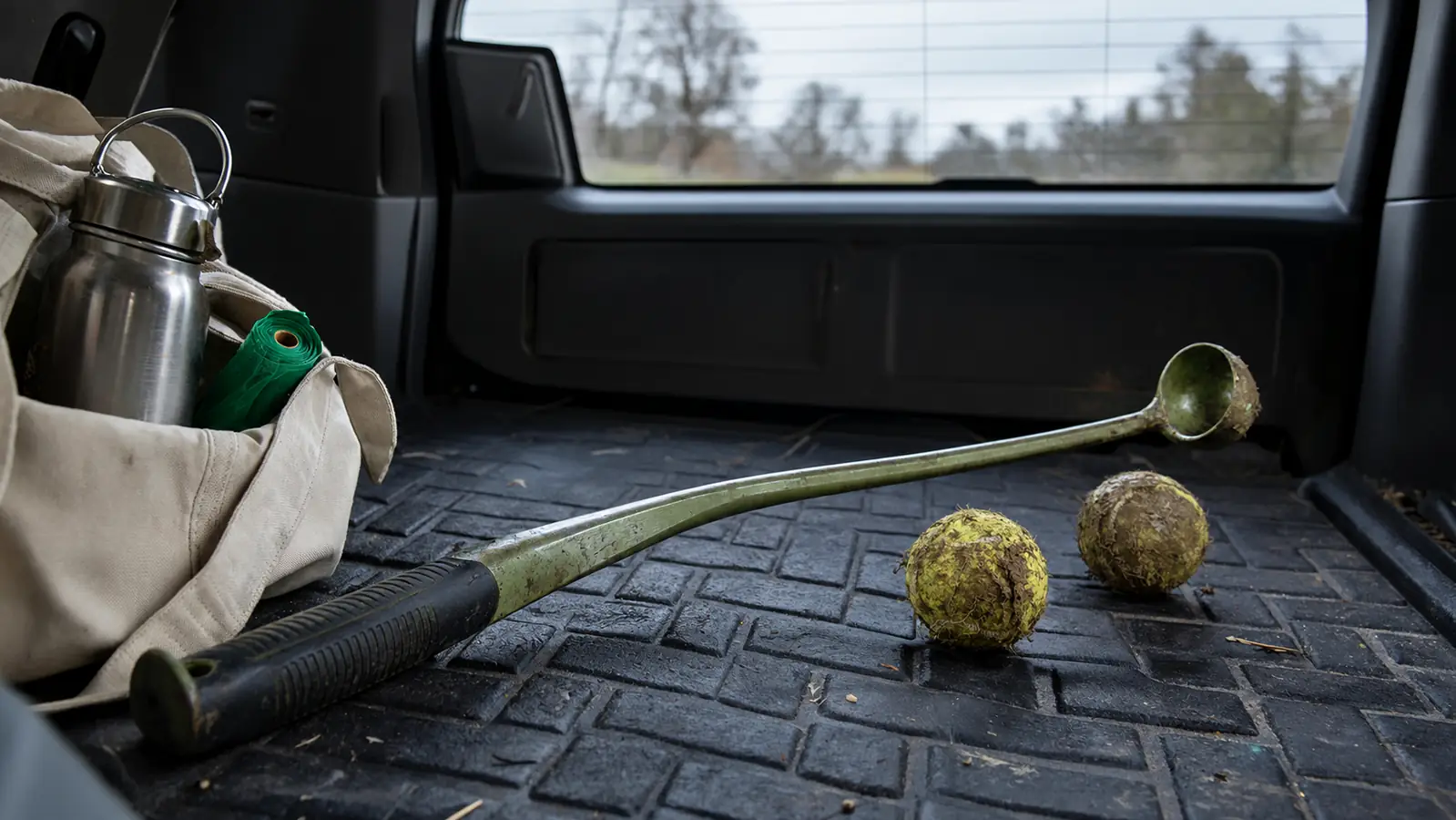
The plastic does get scuffed. Mine has a worn patch where my hand sits and a few scratches along the arm from being kicked around the back seat with the rest of the park gear. Cosmetically it looks like a tool that has been used, which it has been. Functionally, nothing has changed since the first week.
The part I keep an eye on is the end that cradles the ball, since that is the piece doing the actual work. On mine it has held up through four years with no sign of splitting. A friend at the park says hers wore smooth somewhere around year six and she replaced the whole thing rather than fuss with it. That seems like a fair trade for a tool that gets used four or five mornings a week.
The other thing four years teaches you is where to store it. Mine rides in the back of the Forester with the balls and the car hammock, which means it is always there and never in the way. It has never once needed to be cleaned properly, only wiped. I cannot say that about most of the gear that comes through that park gate.
The Saturday Test, With Grandkids in Tow
My grandkids come along some Saturdays, and that is a different kind of park trip. Slower, more snacks, more stopping to look at things. The launcher turns out to be the easiest part of those mornings. A kid can figure it out in about two throws, and suddenly there is a second person wearing Maisie out while I sit on the bench and drink my coffee.
I will say this plainly: watch where they point it. A 26-inch thrower gives a child real distance, and real distance in the wrong direction means a ball over the fence and a grandchild who feels terrible about it. We throw toward the open field, not toward the parking lot, and we have not lost one yet.
What It Does Not Do
It does not pick up after your dog, it does not carry water, and it does not make your dog come back when you call. I still carry the bag holder clipped to the leash handle and I still fill the water bottle at the kitchen sink before every trip. The launcher is one job in a bag full of jobs, and it does that one job without complaint.
It also will not teach a dog to retrieve. Maisie already knew how to bring a ball back before I ever owned this thing, which is lucky, because a launcher and a dog who runs the other way is just a faster way to lose balls. If retrieving is the thing you are working on, work on that first.
And it is sized for a reason. The 26-inch model is built for dogs in the 20 to 60 pound range. My friend with the two small dogs uses a shorter one and the fellow with the giant breed uses a longer one. If your dog sits well outside that range, buy the size that matches your dog instead of this one. The right length makes the tool feel effortless. The wrong length makes it feel like work.
What it also does not do is replace the walk. Maisie still needs the leash walk from the parking lot to the gate and the sniffing tour around the perimeter before she will focus on a ball. The launcher is the main event, not the whole outing. Anyone who tells you a piece of plastic replaces a dog's need to wander and smell is selling something.
What I Liked
- Adds real distance without extra effort, so the dog gets tired before the arm does.
- Light enough to carry on a neighborhood walk and tough enough to live in the car.
- Waterproof plastic has shrugged off four years of rain, mud, heat and being stepped on.
- Simple enough that a grandkid can use it after two practice throws.
- One piece, no batteries, nothing to charge, nothing to lose except the ball.
Where It Falls Short
- Comes with a single ball, and balls are the thing you will lose.
- A muddy ball leaves grit on the launcher until you wipe it down.
- Sized for 20 to 60 pound dogs, so it is the wrong tool at either end of the size range.
- Will not fix a dog who does not already retrieve.
Who This Is For
This is for the person whose dog outlasts their arm. If you are throwing 30 or 40 balls a session and your shoulder tells you about it on the drive home, the launcher solves that specific problem in about ten minutes of practice. It is also for the dog park regular who wants one piece of gear that works every time without charging, calibrating or assembling.
It suits a medium dog best, roughly 20 to 60 pounds, which is a wide band and covers a lot of the dogs you see at a park gate. And it suits anyone who would rather spend their morning watching their dog run than rubbing their own shoulder.
Most of the people I have handed it to at the park were in the same spot I was in. Not injured, exactly, just tired of the ratio. Forty throws for the dog, forty small aches for the person holding the ball. The launcher fixes the ratio, and the ratio is the whole problem.
Who Should Skip It
Skip it if your dog is very small or very large. The sizing is not marketing fluff, it changes how the throw feels. Skip it if your dog does not bring the ball back, because the launcher only fixes the throwing half of fetch. And skip it if you genuinely enjoy throwing by hand, because there is nothing here that will convert you.
I would also skip it if you only throw five or six balls a visit. The launcher earns its place through repetition. At four or five it is a nice thing to have. At forty it is the reason your arm still works.
Four years in the back of my car and it still throws straight
If your arm gives out before your dog does, this is the fix. The Chuckit! Classic is 26 inches, lightweight, waterproof, and comes with one medium ball. Mine has earned its spot in the Forester, and I would buy it again without thinking about it.
Amazon Check Today's Price on Amazon →