Two Septembers ago, Maisie drank from the shared water bowl at the park and threw up on my kitchen floor at eleven that night. No vet visit, nothing dramatic, just a long evening with a towel and a dog who could not tell me what she had gotten into. The next morning I ordered a Kalimdor dog water bottle and stopped letting her drink out of anything at that park that I had not filled myself. That was about two years ago. The bottle has been in the side pocket of my park bag ever since, and it has outlasted one bag, four rolls of poop bags, and my good intentions about wiping down the back seat of the Forester.
Here is the short version before the long one. I go to a fenced off-leash park about ten minutes from my house most weekday mornings at 7:30 and I stay about an hour. Maisie is a six-year-old Australian Shepherd mix, forty-eight pounds, and she runs hard enough that she wants water twice during that hour, not once at the end when we are already walking to the gate. The Kalimdor is a 19 ounce bottle with a 2.8 inch trough on the end. Before it, I carried a plastic water bottle and poured into my cupped hand, and most of it ended up on my shoe.
The Quick Verdict
Two years of weekday mornings and it still goes in the bag every time. Nineteen ounces is exactly right for one dog and tight for two, and I am not going back to pouring water into my hand.
Amazon Check Today's Price →The bottle that ended my cupped-hand routine at the gate
Nineteen ounces, food-grade plastic, 8.47 ounces empty, and a 2.8 inch trough a dog can actually get its muzzle into. This is the one in my park bag every single morning.
Amazon Check Today's Price on Amazon →How I've Used It
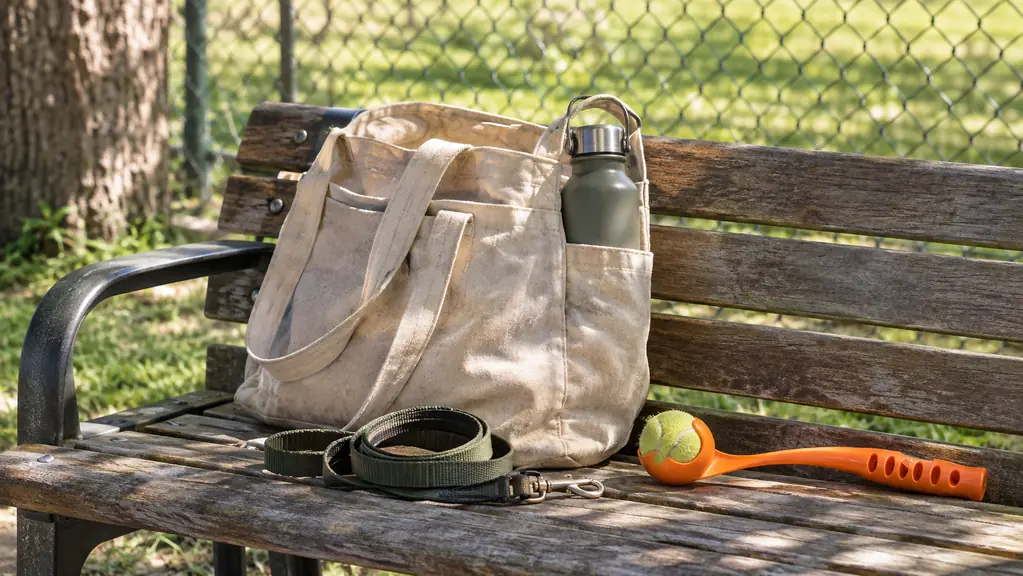
Every weekday morning starts the same way. I fill the bottle at the kitchen sink at 7:15, put the cap on, and drop it in the side pocket of my park bag, where it stands up on its own. It is 10.2 inches tall and 2.7 inches across, so it fits that pocket and nothing else in the bag has to move to make room for it. Empty it weighs 8.47 ounces, which is light enough that I forget it is in there until Maisie comes looking for it. Then it is a ten minute drive and the walk from the parking lot to the gate. The walk in from the lot is about a hundred yards of gravel and the bag rides on my shoulder the whole way. One Tuesday in January I set that bag down in a puddle by the gate without looking, and the bottle came out dry while the canvas did not. That is not a test I set up on purpose, but it is the one I remember when somebody at the bench asks whether the cap actually holds.
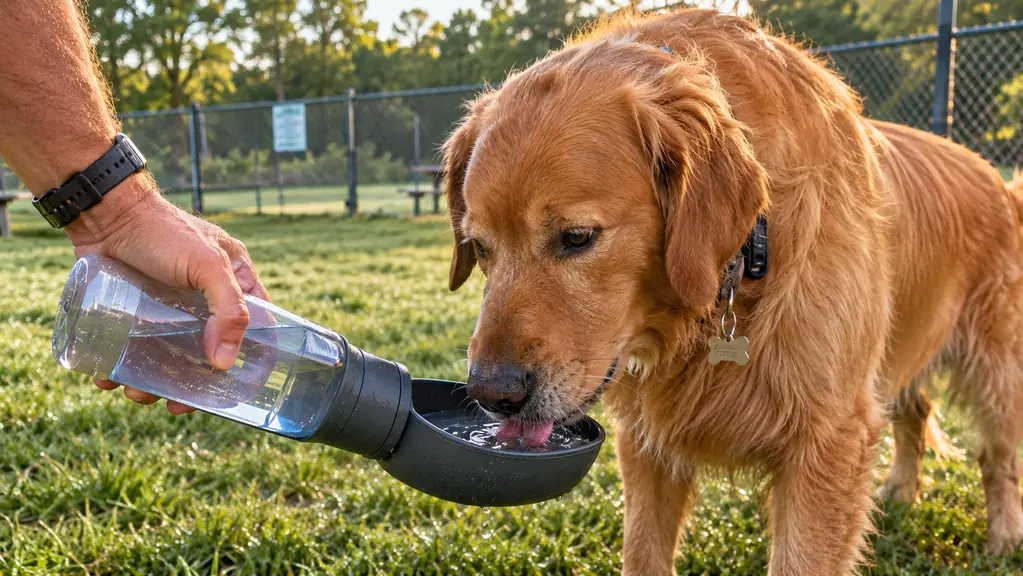
At the park, the bottle comes out after the first hard twenty minutes of running, when she has stopped chasing and started checking in with me. I call her over, tip the bottle, and water runs into the trough. She puts her whole muzzle in and drinks for maybe fifteen seconds. I tip it back, cap it, and put it away. We do that again about forty minutes later, and on a hot morning she gets a third drink, which is the only time I ever come close to emptying it.
At home I dump whatever is left, rinse the trough, and stand the bottle open on the drying rack. Once a week it gets a proper wash with a bottle brush and a little dish soap, and I let it air dry completely before the cap goes back on. Two years of that and there is no film, no smell, nothing growing in the corners. I did leave it in the car for three days in July once, and that batch of water was not something I would have offered anybody. That was my fault, not the bottle's.
What the Numbers on the Label Mean on a Real Park Morning
Nineteen ounces sounds like a lot until you are standing in the sun with a thirsty dog, and then it sounds like exactly enough. Maisie takes maybe six to eight ounces in a full visit. That leaves room for a splash over her chest when it is above eighty-five, and enough left to offer water to whichever dog has wandered over to investigate. What it does not leave room for is a second dog drinking properly. On the mornings my friend brings both of hers, the Kalimdor gets emptied by the second round and I am glad I threw a backup in the car.
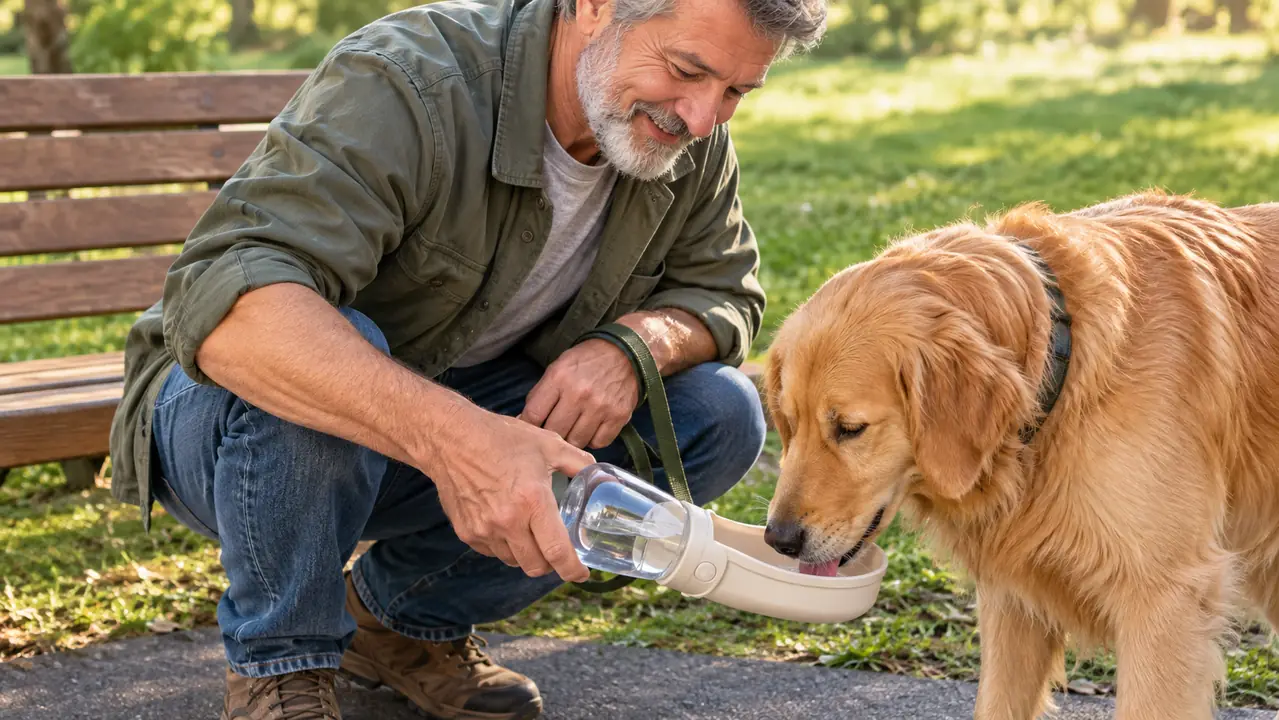
The 2.8 inch trough is the part I did not appreciate until I had used it for a month. It holds water in a place a dog can actually reach. Maisie can get her muzzle in without me crouching, and a smaller dog can reach it too, which I know because a corgi in our regular group helps himself every time I set it down. What it is not good for is a dog with a very short, flat face, which is a problem with the shape of a trough in general and not this one in particular.
The size is a trade off in both directions. At 10.2 inches tall it is easy to find in a bag and hard to lose, but it will not go in a coat pocket the way a folding bowl will. Empty it is 8.47 ounces, which is nothing. Full, you are carrying about a pound and three quarters in one hand, and on a long walk rather than a park loop I notice it. That is the honest version of the weight question. On the longer walks at home, the ones where we are out an hour and a half on pavement rather than grass, I do feel it shift from hand to hand. That is the honest case against the size. For the park, where the bag does the carrying and I only hold it for the fifteen seconds Maisie is drinking, it has never once bothered me.
Two Years In: What Held Up and What Didn't
The bottle has been dropped at the gate, set down on asphalt, knocked off a bench, and rolled around the back of the Forester more than once. It has scuffs on the outside that I could not photograph well if I tried. There are no cracks, no chips at the rim of the trough, and the food-grade plastic has not gone cloudy or taken on the smell of the inside of my bag. My bag itself looks worse than the bottle does, and the bag is two years newer. The worst of it came last April, when the bag slid off the bench and the launcher landed on top of the bottle on the asphalt. I picked it up expecting a crack at the rim and found a scuff and nothing else. The seam where the trough meets the body is where I expected trouble first, and it has stayed tight. I still fill it to the top every morning, which I would not do with a bottle I did not trust.
The leak proof claim is the one I was most suspicious of, because I had been burned before by a bottle that soaked a paperback. I have carried this one sideways, upside down, and loose in a bag with a leash and a launcher on top of it, and I have not had a wet pocket since the first week. That first week I did not have the cap on squarely and I got a damp patch on my bag. That was operator error and I have not repeated it in two years.
The thing that has aged is the routine around it, not the bottle. If I put it away wet, the trough holds a little water and it will dribble onto whatever is under it in the bag. So the rinse and the air dry are not optional, they are part of using it. I also stop noticing it, which is the highest compliment I can pay a piece of gear. It does its job at the same spot in the same order every morning, and I do not think about it at all.
Nineteen ounces is not a lot of water. It is exactly enough for one forty-eight pound dog on a warm Tuesday, and that is the number I plan my mornings around.
The Trough Is the Whole Point
For about three years before this, my system was a plastic water bottle and my left hand. I would pour, she would lick, and half of it went on the ground or on me. She would back away when the water hit her nose, then come back, then back away again. It took longer than it should have and it made a mess at the one spot by the bench where everybody stands and chats.
The trough changes that because it holds water still. She puts her face in and drinks until she is done, and I do not have to do anything except keep the bottle tipped. I can do it with one hand, which matters because my other hand usually has a leash, a launcher, or a gate latch in it. That is the actual benefit here. Not the bottle. The fact that the water stays in one place long enough for her to drink it. Watch a dog try to drink from a moving hand and you see the problem in about four seconds. The water moves, the dog moves, and the two never line up. The trough takes the moving part out of it. I handed it to a woman at the gate last fall whose dog would not touch the park bowl at all, and he drank from the trough on the first try. That told me it was the shape of the thing and not the dog.
The trade off is cleaning. The trough is a small open cup on the end of the bottle, and it is the part that needs attention, not the inside of the bottle. I run my thumb around it with soap once a week and rinse it every day. If I skip that after a muddy March morning, I can tell by the next afternoon. It is thirty seconds of work and it is the only maintenance this thing asks for.
What I Would Change, and What I Have Stopped Worrying About
If I could change one thing it would be capacity. Nineteen ounces is right for Maisie and wrong for a Saturday, when the grandkids come along, we stay longer, and at least one small person wants to be the one who gives the dog a drink. I bring a second bottle on those mornings. Two bottles is still lighter than the jug I used to haul out there, so I am not complaining, but I would notice a bigger option if Kalimdor ever made one.
What I have stopped worrying about is the shape. It is a bottle with a trough on the end, it fits in the bag, and it stands up on a bench without falling over, which is more than I can say for a collapsible bowl. I spent a while early on thinking a folding bowl would be more convenient. Then I watched one blow across the parking lot on a windy morning and decided I was done with that idea.
I also stopped worrying about the food-grade plastic. It does not taste like anything, which I know because I have taken a sip out of it myself when I forgot my own water. That is not a recommendation, it is just what happened, and the water tasted like water. Two summers in a hot car and it still does.
What I Liked
- Leak proof in practice: two years of riding sideways in a bag with no soaked pocket
- 19 ounce capacity covers one forty-eight pound dog for a full hour with water left over
- 2.8 inch trough lets the dog drink instead of licking water off my hand
- Food-grade plastic, 8.47 ounces empty, 10.2 inches tall so it stands in a bag pocket
- One hand operation, which matters when the other hand has the leash and the launcher
Where It Falls Short
- 19 ounces runs out fast with two dogs or on a longer summer outing
- Leftover water has to be dumped and the trough rinsed or it smells by day three
- 10.2 inches tall means it will not go in a coat pocket
- The trough, not the bottle, is the part that actually needs cleaning
Who This Is For
This is for the person who is at the park three or four mornings a week with one dog and who has gotten tired of the shared bowl situation, or tired of pouring water into a hand and watching most of it land on the grass. It suits a medium to large dog that drinks properly, a bag with a side pocket, and an owner who wants to hand out water without crouching or putting down the leash. If your dog runs hard and then wants a real drink, the 2.8 inch trough is the reason to pick this one over a bowl.
Who Should Skip It
Skip it if you bring two or more dogs that all drink on the same schedule, because you will empty 19 ounces and wish you had a bigger bottle. Skip it if your dog has a very flat face and struggles with any trough, since a shallow bowl on the ground will serve you better. And skip it if you want something that disappears into a coat pocket, because at 10.2 inches tall this is a bag item, not a pocket item. None of that makes it a bad bottle. It just means the size and shape are doing a specific job.
Two years, one bottle, and no more cupped-hand pouring
If you are at the park most mornings with one dog, this is the simplest piece of gear in my bag. Fill it at the sink, tip it at the bench, rinse it when you get home.
Amazon Check Today's Price on Amazon →