
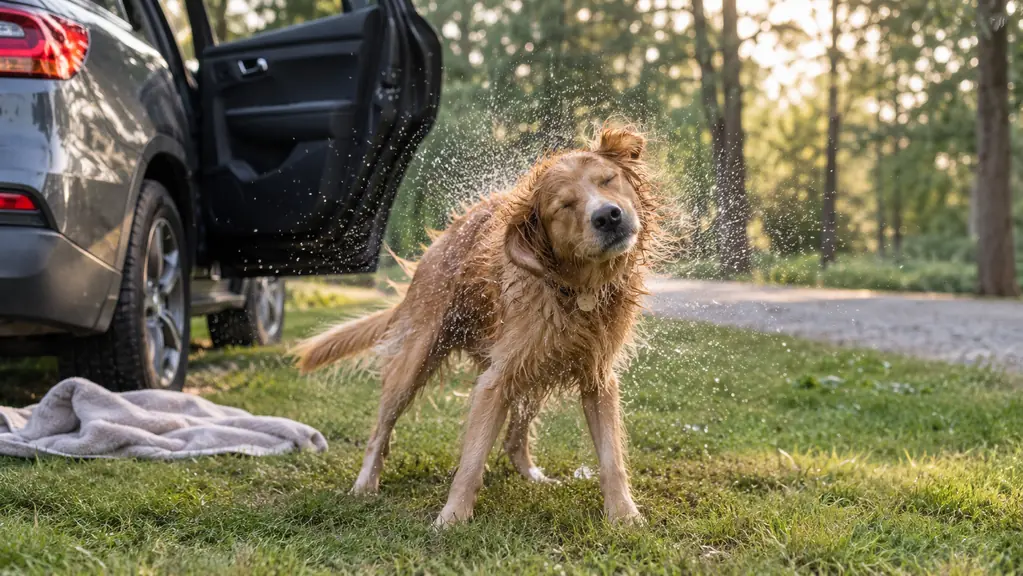
The drive home from the park is the part nobody warns you about. Maisie can spend a perfectly happy hour sniffing fence posts and rolling in something I would rather not identify, and she is still in a fine mood when I open the back door of the Forester. Then she jumps in, shakes once, and the back seat looks like the park moved in with us. Wet paws. Sand worked down into the seams. That damp dog smell that does not leave on its own. For two years I drove home with the windows down and told myself it was fine. It was not fine. My back seat smelled like a pond.
What fixed it was less a gadget than a routine, plus one piece of gear that makes the routine possible. After a rainy March morning left the seat soaked straight through, I put an Active Pets car hammock in the Forester and stopped taking it out. That was about three years ago. What follows is the order I actually do things in, most weekday mornings around 7:30, at a fenced park ten minutes from my house, with a 48 pound Australian Shepherd mix who believes every puddle is a personal invitation.
The back seat stops being the messiest part of the trip
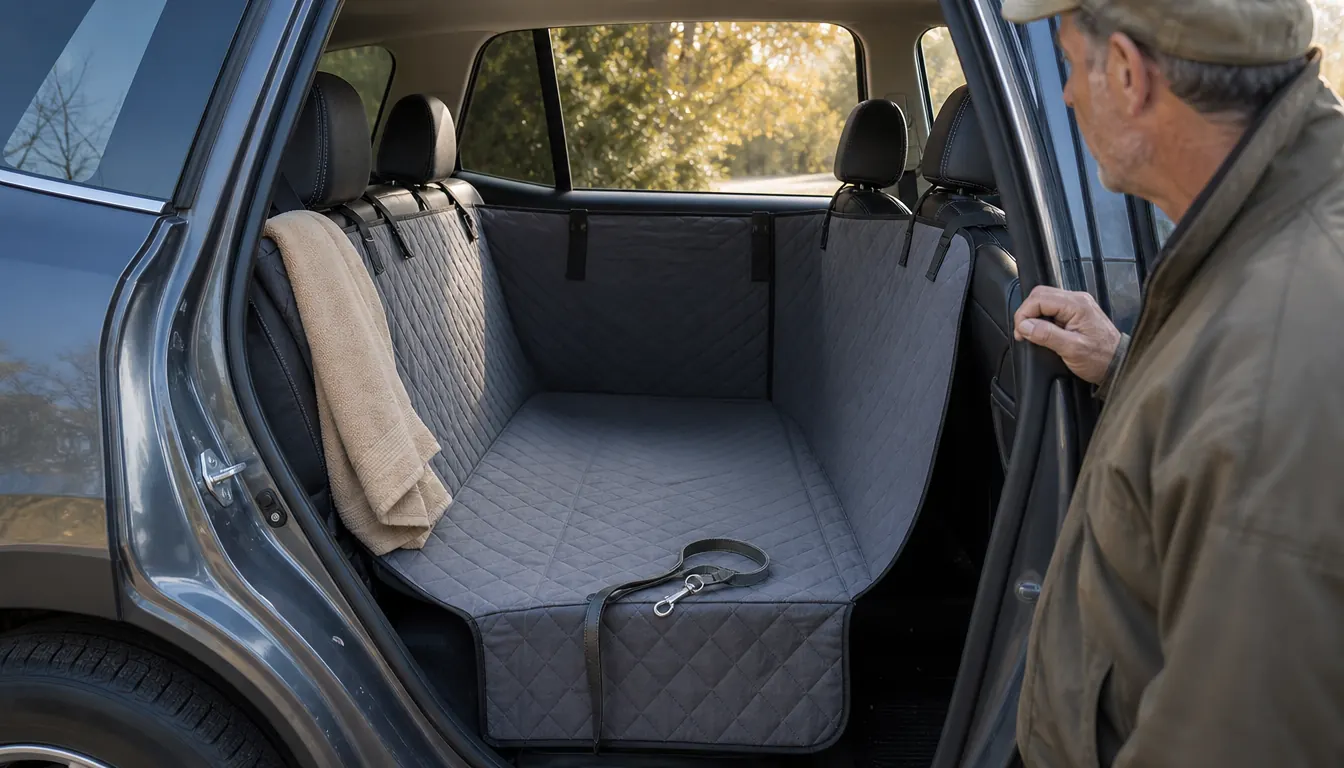
The Active Pets hammock is a waterproof 600D Oxford seat cover in a universal fit for a bench rear seat, and it stays installed in my Forester between park visits. Machine washable, wipe clean, and it has survived three years of wet fur and claws.
Amazon Check Today's Price on Amazon →Step 1: Put the hammock in once and leave it in
The biggest reason people give up on seat protection is that they install it and pull it out every single trip. That gets old by the second week. The Active Pets hammock lives in my back seat full time, whether Maisie is riding with me or I am running to the hardware store alone. It spans the rear bench and covers the seat surface she lands on, and it has not slid around on me once, even on the mornings she turns in three circles before she finally lies down.
The fabric is 600D Oxford, which has the heavy canvas feel of a good duffel bag, and it is waterproof. That matters more than anything else on a wet morning. Water sits on top of it instead of soaking down into the seat cushion, so a ten minute ride home does not turn into an afternoon of blotting upholstery. It is listed as a universal fit, and it settles into the Forester's bench rear seat without a fight.
I learned the leave-it-in lesson the hard way. My first attempt at seat protection was an old bath towel folded double, and I genuinely believed that was enough for about six weeks. It shifted every time she turned around, it bunched up under her, and one morning she stepped off the edge of it and put a muddy paw directly on the seat. After that I tried a fitted sheet pulled over the bench, which lasted two days before she had it in a heap on the floor. The lesson was not that I needed better fabric. It was that anything I had to arrange before every single trip was going to end up on the floor. The hammock goes in once and stays put, and that is the only reason it works.
Twice a year I pull it out and run it through the washing machine, because it is machine washable. My grandkids ride in the back on Saturday park trips, and I like the seat they climb into to be a clean one. The rest of the time, vacuuming it or wiping it with a damp cloth takes about as long as filling the kettle.
Step 2: Do the dirty work at the gate, not at the car door
There is a towel in the pocket behind my seat and it never goes in the house. When we come out through the gate, Maisie and I step off to the side of the gravel path and I do the same three things in the same order: a rub down the back and sides, a quick pass over each paw, and a feel along her belly, which is where she collects the most mud because she has no sense of dignity. All of that happens outside, in the grass, where it can stay.
That one habit has saved me more cleaning than any product I own. Whatever you knock off the dog at the gate never becomes your problem. Whatever you leave on the dog rides home and gets pressed into the seat cover, and then you are vacuuming on a Tuesday night instead of watching something on television. The towel gets shaken out at the park and washed on Sundays with the rest of the laundry.
The paw pass is the part I used to skip, and skipping it is what cost me. A dog's pads hold grit the way a sponge holds water, and it does not come out on its own. What comes out is a fine brown dust that works into the fabric and shows up on anything light colored it touches afterward. Four quick wipes, front left, front right, back left, back right, takes me about fifteen seconds and it is the difference between a cover I vacuum once a week and one I have to scrub. On the wet mornings I add a second pass with the dry end of the towel, because a damp paw picks up every bit of loose sand between the gate and the car and deposits it in the footwell.
Step 3: Load her the same way every time
Maisie gets in through the same rear door, on the same side, and she waits for the same word before she jumps. I stand between her and the front seat while she settles. That is partly manners and partly mess control. When the dog always lands in the same spot, the dirt always lands in the same spot, and the rest of the car stays out of it.
She rides in the back. That is a rule in this house, not a preference, and it has been since she was about a year old. People who let a wet dog roam the car end up cleaning the gear shift, the door panels, the console and the backs of the front seats. I clean one surface. The hammock catches what she brings in and holds onto it until we get home.
The word is "up," and I say it once and then I wait. I did not teach her that because I am a disciplined trainer. I taught her that because she used to launch herself in the second the door opened and hit the far door panel on the way, and there was a scratch on that panel for two years to remind me. Standing still for three seconds changed the outcome of the whole trip. It also means I get a look at her paws and her belly before she is on the seat, which is the last chance I have to catch something I missed at the gate.
Step 4: Handle the wet ride home
If she is properly soaked, which happens plenty in March, that same towel goes down on the hammock before she gets in, and it comes out with me when I park. Ten minutes of sitting on a towel pulls a surprising amount of water out of an undercoat. The cover underneath stays dry, and so does the seat underneath that.
Window cracked about an inch, no more, because at 40 miles an hour an inch is plenty of air and three inches is a wet ear flapping against my shoulder. No errands on the way home. The park trip ends at the house. Every stop is another chance for her to stand up, turn around and redistribute whatever is on her paws.
The waterproof fabric does the quiet work here. Water that would soak into upholstery stays on the surface, and by the time I pull into the driveway most of it has run to the low spot and can be blotted up in one motion. I have had mornings where the cover looks like a small swamp and the seat under it is bone dry. That is the whole point of the thing.
One specific morning still sticks with me. It had rained since Thursday, the park path held water the way a shallow pan does, and Maisie came through the gate with her whole underside brown to the elbows. I had not brought a spare towel, so she rode home on the cover with nothing under her, and by the time I parked there was a puddle sitting in the low spot where her chest had been. I carried her towel in the next morning and have carried it every morning since. What surprised me was not that the cover held the water, it was how easily it gave it up. One pass with a dry cloth and the surface was ready for the next trip.
Step 5: Clean the cover on a schedule, not when it complains
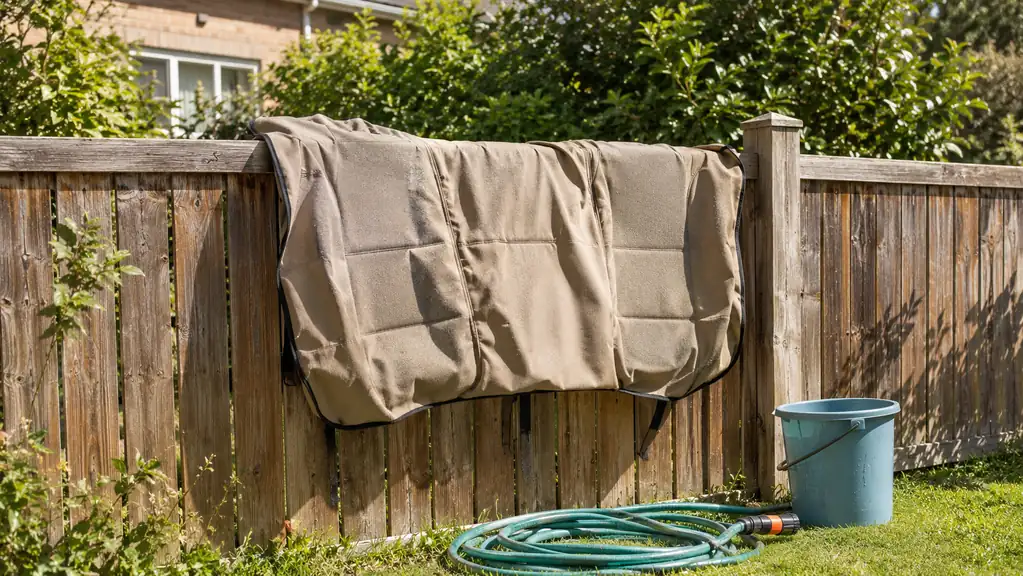
Once a month, usually the first Saturday, I take the hammock out, carry it to the driveway and hose it off. Then it goes over the fence to dry while I do yard work, and it is back in the car by lunch. Three years of this and it has held up to claws, wet fur, sand, and one unfortunate incident involving something she found in the bushes that I will not describe here.
Between those washings I vacuum it every week or so with the brush attachment and wipe down the spots that need it. Hair does not work its way into this fabric the way it works into upholstery, which is most of why the seat underneath still looks like a seat. If I skip a couple of weeks I notice. If I skip a month, the whole car notices.
The hose-down takes eleven minutes, and I know because I timed it once out of curiosity. Eight of those minutes are the cover sitting on the grass while I do something else. The washing machine cycle takes longer than that, so I only do the machine wash in the warm months when I can hang it out and let it dry the rest of the way in an afternoon. In February I stick to the hose, a bucket of warm water and a rag, because a cover that will not dry before dark is a cover that goes into the car damp, and that is the one mistake that undoes the whole routine.
One thing I would tell any new park regular: the cover does not need to be spotless to do its job. It needs to be in the car. A slightly hairy hammock that is installed beats a clean one folded up in the garage every single time, and that is true whether the morning is dry or whether it has been raining since Thursday.
Three years, one hammock, one hose-down a month, and the back seat of my Forester still looks like a back seat instead of a dog bed.
What Else Helps
The hammock handles the ride home and nothing else. Everything before that is other gear, and after five years of park mornings I have landed on a short list. The Kalimdor water bottle lives in the side pocket of my park bag and gets filled at the kitchen sink before every trip, which started after Maisie drank from the shared park bowl and had an upset stomach that night. The Chuckit! Classic launcher does the fetching so my right shoulder does not, and it rides in the back of the Forester with the balls. The Earth Rated bag holder clips to the leash handle and gets refilled from the box of rolls in the hall closet. The iYoShop hands-free leash gets us from the parking lot to the gate with both of my hands free for the latch, the bottle and the launcher.
Beyond gear, the two habits that help most are boring ones. Keep a dedicated towel in the car and never bring it inside, and keep the park bag packed and by the door so nothing gets forgotten at 7:25 in the morning. A dog who runs hard for an hour is a dog who sleeps in the back seat on the way home. A dog who sleeps is a dog who is not redecorating your upholstery while you drive.
If you want to go deeper on any of it, I have written up the long version of how the cover has held up over three years, a straight comparison of the hammock style against a flat bench seat cover, and a rundown of what a back seat hammock actually protects beyond the seat itself. Start with the last one if you are still deciding whether you need this at all.
If your back seat already smells like a pond, start here
The Active Pets hammock is a waterproof universal fit cover in 600D Oxford fabric, machine washable, and it carries more than 50,000 ratings on Amazon at 4.6 stars. Mine has been in the Forester for three years and I still hose it off about once a month.
Amazon Check Today's Price on Amazon →