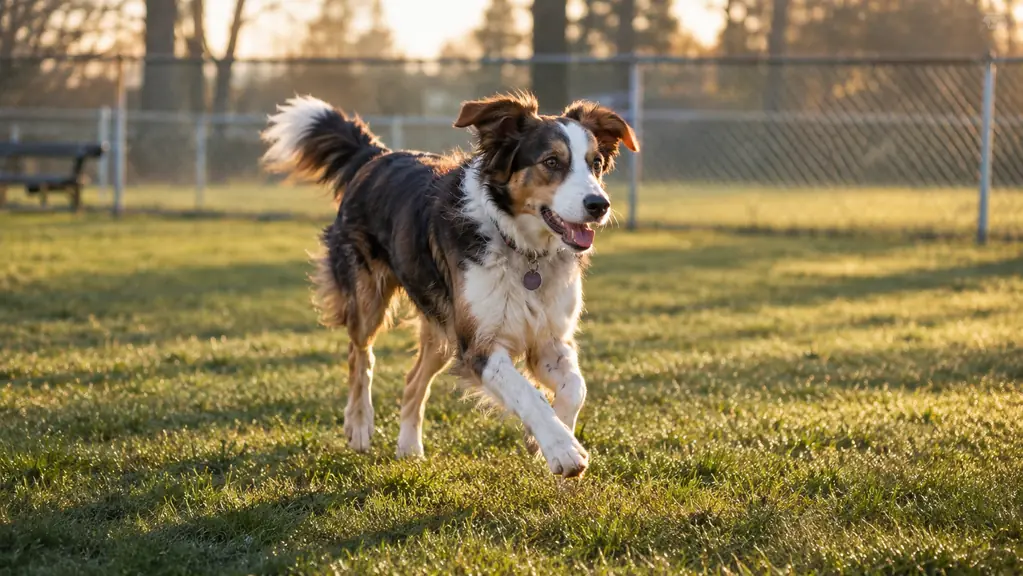
Maisie needs a real run every day or she spends the afternoon herding the vacuum cleaner. That is the honest reason I am standing in wet grass at the Chesapeake dog park at 7:30 most weekday mornings with a coffee going cold in my hand. Fetch is the fastest way to give her that run. It is also the fastest way to start trouble at a dog park if you do it badly, and I did it badly for the better part of a year.
Here is what bad fetch looks like. You throw a ball by hand and it lands twenty feet out, right in the middle of a knot of dogs, and now three of them are racing for it and one is going to get snappy. Or your shoulder gives out around throw twelve and the ball dribbles into the mud. Or you throw a good one, your dog brings it back, and then she plants her feet and refuses to give it up, because there is one ball in the world and she has it. A friend at the park handed me her Chuckit! Classic one morning about four years ago and I ordered my own that afternoon. Everything below I learned in the months after that, mostly by getting it wrong first.
The one tool that made fetch at the park work for us
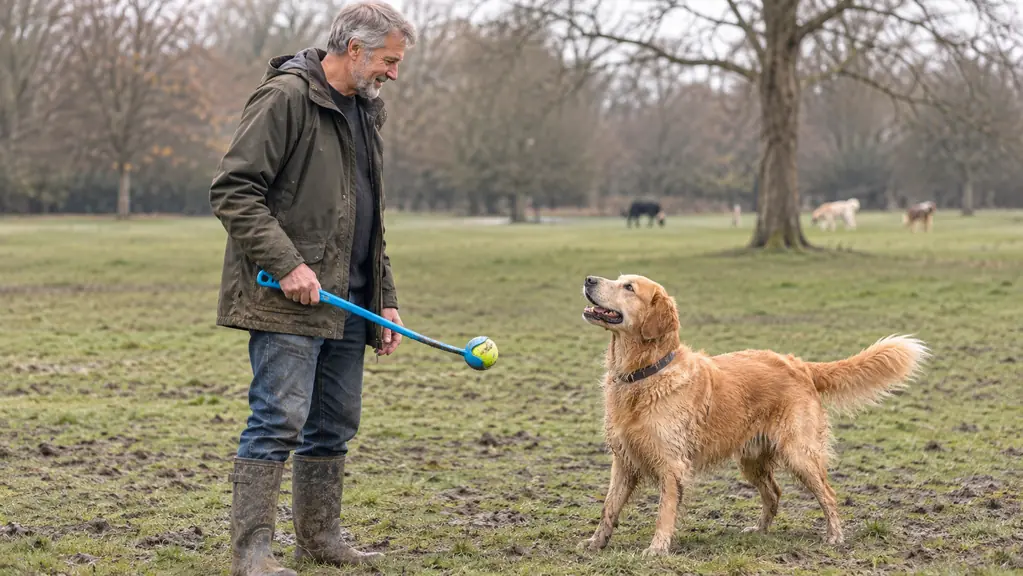
The Chuckit! Classic is a 26 inch launcher that takes a medium ball, which is the size the listing puts in the 20 to 60 pound range. Maisie runs about 48 pounds, so that fits her exactly. Mine lives in the back of the Forester next to the balls so I never leave it on the kitchen counter.
Amazon Check Today's Price on Amazon →Five Steps, In the Order That Works
Step 1: Walk the Field Before You Unclip the Leash
The launcher does not make the game safe on its own. You do that part, and it starts before the leash comes off. Maisie rides in the back seat of the Forester with the hammock already down, and I clip the hands-free leash on in the parking lot so both my hands are free for the gate latch, the bag dispenser and the launcher. Then we walk the inside edge of the fence together at a normal pace before I let her go.
I am looking for three things. First, which dog is guarding. There is usually one who has decided a particular ball is hers and will body check anybody who comes near it, and she is not being mean, she is just doing her job. Second, where the ground is bad. The low corner by the west gate holds water until June, and a ball hit into it is gone. Third, where the open lane is. I want a strip of grass with nothing on it, long enough that a rolling ball will not run through a group of dogs or under the bench where somebody's sandwich is sitting.
The walk takes ninety seconds. It saves me a ten minute apology at least once a month.
Step 2: Teach the Trade at Home, Not at the Park
Every fetch problem I have had with Maisie was really a retrieve problem, and retrieve is a skill you teach in a hallway, not in the middle of a crowd. The park is where you practice something your dog already knows. It is a terrible classroom.
So the week before I care about how fetch looks at the park, I do this in my living room with two balls. I toss one about six feet. She picks it up. I show her the second ball, and when she turns back toward me I roll it a few feet past her, and she drops the first one to go get it. That is the whole lesson. Two balls means she never has to surrender the only object she has, so the drop stops feeling like a loss. Ten reps, twice a day, for a week. My hallway rug has never recovered.
The other half is the wait. I put her in a sit at the back door, toss a ball out onto the patio, and she does not move until I say go. If she breaks early, I pick the ball up and we start over. That one is worth every minute, because a dog who breaks at the back door will break at the park gate and run straight into somebody's knees.
Step 3: Load the Launcher Right and Throw Low
The Chuckit! Classic is 26 inches long and takes a medium ball. To load it, I press the ball down into the cup at the end until it seats, then check it with a thumb. A half seated ball flies short and crooked, which is worse than no throw at all, because it teaches the dog nothing and lands somewhere you did not choose. Loading it properly takes about a second and a half once you have done it a few hundred times.
Then the throw. Underhand, from the shoulder, aimed at a spot on the ground about fifteen yards out rather than at the horizon. The launcher turns an easy swing into a long throw, and if you swing hard you will put the ball over the fence and end the game. Aiming low keeps the ball in my lane, keeps the bounce predictable and keeps Maisie from having to cross the middle of the field where the other dogs are. On wet grass the ball skips once and rolls, and a rolling ball is easier for her to track and easier for me to read.
The other reason I throw low is my right shoulder. I threw by hand for years, and by the end of a session I could not lift my arm high enough to hang up my coat. The launcher took that away. I do not have to throw hard, I just have to swing smoothly, and my arm is fine the next morning.
I threw by hand for years and could not lift my arm to hang up my coat at the end of a session. With the launcher I do not throw hard, I just swing smoothly, and my shoulder is fine the next morning.
Step 4: Build a Two Ball Rhythm That Never Stalls
With one ball, fetch at a dog park has a hard stop built into it. The dog has the ball. You want the ball. The dog now understands that coming back means losing it, so she does a slow loop around the field with it in her mouth while you stand there. I have watched that standoff play out twenty times.
With two, the game keeps moving. One ball is in her mouth on the way back, the other is in my left hand. When she gets close I show her the second one, she drops the first at my feet, and I scoop it up with the cup and throw. The second ball does not have to go anywhere interesting. Sometimes I roll it four feet. What matters is that she has a better reason to give up the first one than to keep it.
One practical note. At a busy park, keep the spare ball in your hand, not on the ground. A loose ball on grass is an invitation, and the dog who picks it up is not going to hand it back to you, which means you are now negotiating with a stranger about a piece of equipment. That conversation is always worse than you expect it to be.
Step 5: End the Game Before She Decides To
Maisie would fetch until she dropped, and that is not a good reason to let her. She is six and in good shape and she still has no idea when to stop, so I decide for her. I count throws. Thirty is our number, and the last two are short ones close in, so she never finishes on a hard sprint.
Then the cool down. The hands-free leash goes back on and we walk one slow loop of the fence. The water bottle comes out of the side pocket of my park bag and she drinks from the trough of it, the way she has since she got an upset stomach from the shared bowl about two years ago. The bag dispenser is on the leash handle, so cleanup happens on the way out rather than in the middle of the field. The launcher goes in the tote and the balls go in a bucket at the kitchen sink when we get home.
The reason to end early is simple. If she quits the game herself, the last thing she learned is that fetch stops being fun when she is tired, and the next visit starts with a dog who is slightly less eager. If I end it while she still wants one more, she is dragging me toward the gate the next morning.
What Else Helps
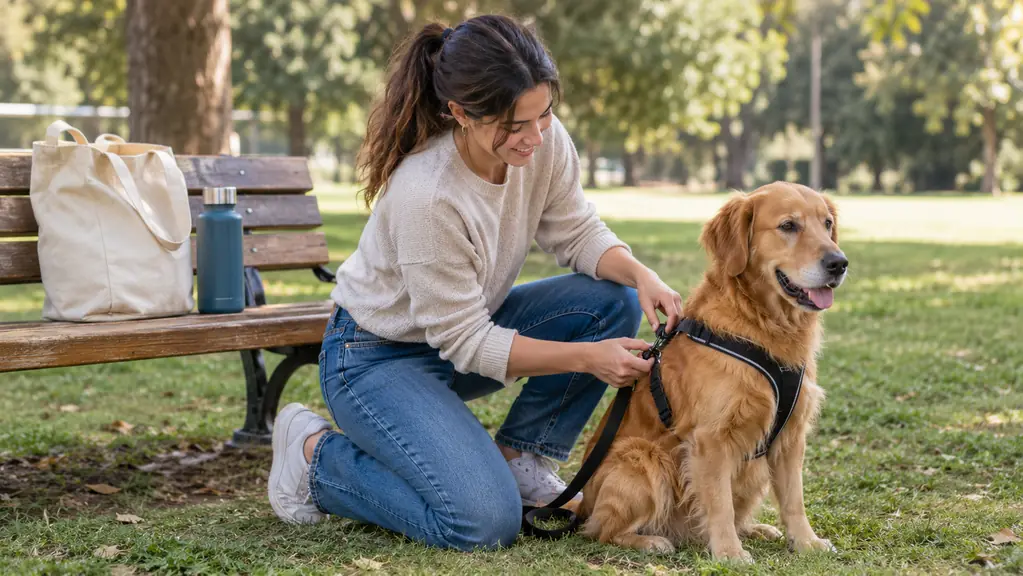
The launcher is the tool that made fetch work for us, but it is not the only thing in the bag, and each of the other items is there for a different job.
The Kalimdor water bottle sits in the side pocket and gets filled at the kitchen sink before every trip. It has a trough that flips out, so Maisie drinks properly instead of me pouring into my cupped hand and losing half of it down my sleeve. On a warm morning she wants it after the cool down loop, not before.
The Earth Rated holder clips to the leash handle and I refill it from the box of rolls in the hall closet, which is the only system I have ever managed to keep going for more than a month. The iYoShop hands-free leash is the newest of the lot, about a year old, and it is the reason I have two hands at the gate. It has a pouch for keys and phone, and I need both free, because the latch is stiff and the launcher takes a hand.
The Active Pets hammock has been in the back seat of the Forester for about three years, since the morning Maisie came back from a rainy visit caked in mud and I spent a Saturday scrubbing upholstery I could not afford to replace. It stays installed. I pull it out and hose it off about once a month, and that is the entire maintenance routine.
None of these replaces the launcher. The bottle does water, the bags do cleanup, the leash does the gate, the hammock does the ride home. But a fetch session that ends with a thirsty dog, a full dispenser and a muddy back seat gets shorter every week, and Maisie notices.
What I'd Change If I Started Over
Two things. I would have taught the trade at home before ever bringing a ball to the park, and I would have stopped throwing by hand a year earlier than I did. The first mistake cost me a few months with a dog who thought fetch was a keep away game. The second cost me a shoulder that still clicks when I reach over my head.
I also would have picked my lane more carefully. For a while I threw from the middle of the field because that is where the grass was best, and I spent most of those sessions watching other people's dogs instead of mine. Now I throw from the edge, down a line, and I can see Maisie and the ball and the fence all at once.
One more small thing. The ball matters more than people think. The medium ball that comes with the Chuckit! Classic is the right size for a dog Maisie's size, and when I lost one for a week and used a smaller ball from the garage, she mouthed it awkwardly and dropped it constantly. A spare medium ball in the tote costs nothing and saves a week like that.
And I would have counted throws from day one. Dogs do not come with a brake pedal. If you are the brake, you need a number, and thirty is mine.
Start with the launcher, then let the rest of the bag catch up
The Classic is a 26 inch launcher and it comes with a medium ball, which is the size the listing puts in the 20 to 60 pound range. Mine has been riding in the back of the Forester for four years and it still loads the same way it did on the first morning.
Amazon Check Today's Price on Amazon →